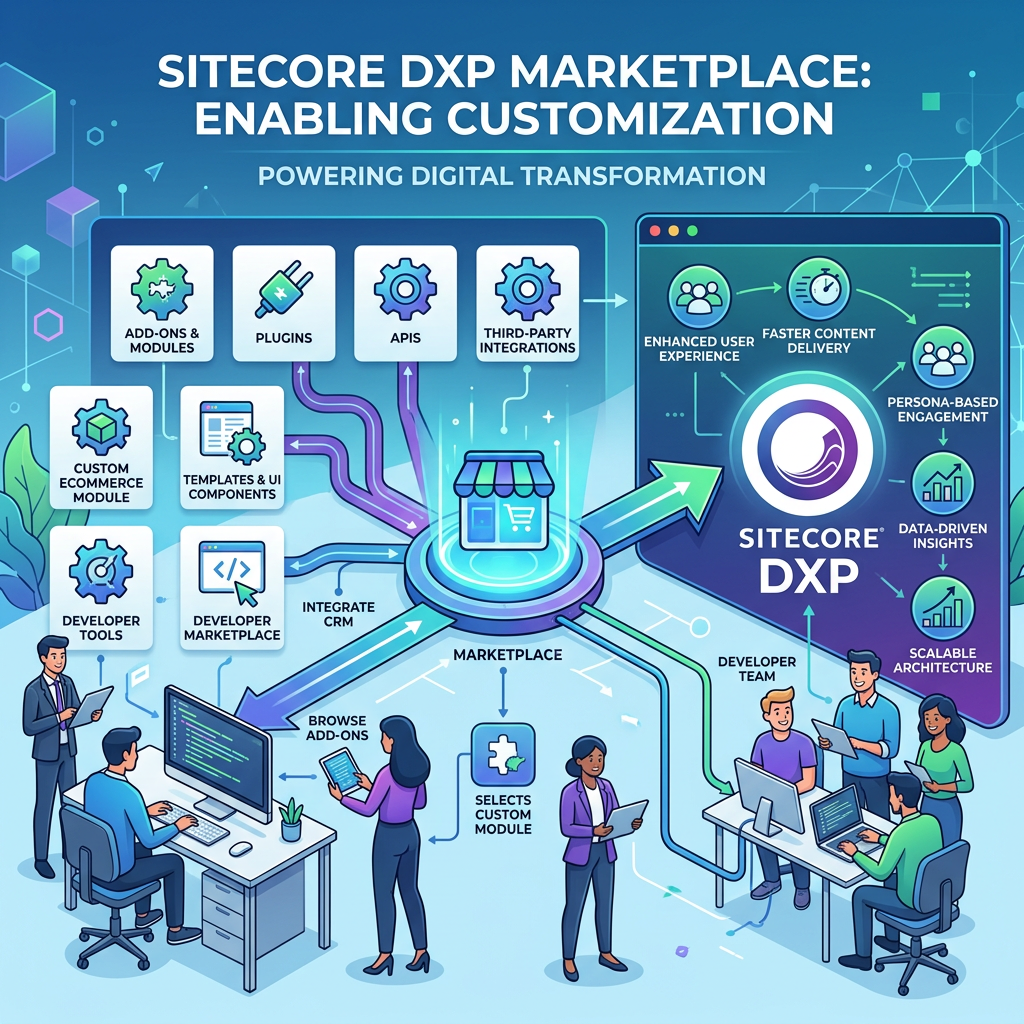
Welcome back to Sitecore Tips & Blog!
During our presentation at SUGCON(click here to see the full video), my colleague Rodrigo Peplau and I evaluated DXP platforms across four main pillars. Today, I want to highlight the Community Marketplace pillar, how it is redefining DXP extensions, and how Sitecore compares to other platforms in the market.
What is a DXP Marketplace (and What Is It Not)?
Historically in the Sitecore world, extending the platform meant searching for individual GitHub repositories or free community modules scattered across the internet. You would download the source code, integrate it yourself, and hope it kept working without breaking during your next upgrade.
A true Modern DXP Marketplace changes that completely:
- Centralized Hub: It provides a single, controlled environment to discover, install, update, rate, and uninstall apps.
- Quality & Security Control: Unlike unvetted modules of the past, modern marketplaces validate and review submissions to ensure platform safety and quality.
- Vendor & Community Support: Both platform vendors and third-party partners can publish integrations.
- Monetization: Partners can monetize their solutions, which incentivizes ongoing support, active maintenance, and continuous feature development.
Practical Use Cases: Stop Reinventing the Wheel
Building custom code for every common integration consumes valuable development hours. Instead of writing custom logic for standard tools on every client project, a marketplace enables one-click extensions:
- Analytics & Tracking: Quickly deploy standard tools like Google Analytics without custom code setups.
- Marketing Automation: Seamlessly connect platforms like Marketo or Sitecore Content Hub.
- E-Commerce & Payments: Easily integrate services like Shopify or PayPal with plug-and-play connectors.
By utilizing pre-built apps from the marketplace, development teams can shift their focus away from repetitive integrations and spend time building differentiating business features.
Looking Back: Lessons from the Monolith Era
The Sitecore community has always been incredibly driven. Extensions like Sitecore Extensions, Unicorn, custom Sitecore Forms controls, and performance modules paved the way for modern marketplace concepts.
However, with the transition to SaaS architectures, moving away from fragmented GitHub repos to a centralized marketplace model ensures that your customizations remain isolated and upgrade-safe.
Key Takeaways:
- Ecosystem Growth & Community Power: Sitecore stands out strong due to its global community of 200+ MVPs and annual Hackathons. The community rapidly produces innovative cutting-edge solutions that feed directly into the growth of the marketplace.
- Native Installation: Sitecore excels with a seamless, isolated 5-star installation experience that allows non-technical operators to safely manage and configure apps.
- Strategic Trajectory: While older platforms lead in absolute longevity/app volume, Sitecore’s emerging SaaS marketplace is strategically positioned for rapid enterprise growth.
Final Thoughts
The DXP landscape is moving faster than ever. While these scores represent a snapshot in time, Sitecore’s vision for an isolated, community-driven marketplace ensures that developers can extend the DXP quickly while keeping the core platform secure.


